


Transit planning involves brutal trade-offs. Do you run frequent buses where ridership is highest, or ensure every community gets some service, even if those buses run nearly empty? For the Whatcom Transportation Authority (WTA) board, who are mostly local politicians in ex-officio positions and don't necessarily have specific planning experience, these weren't abstract concepts but decisions affecting real communities.
The idea
To make sure that the board had a grasp of these trade-offs when making service coverage decisions, WTA's planning and communications teams wanted to move beyond PowerPoint presentations and dry reports. They asked us for help to “gamify” the discussion, although the specifics remained undefined. As a transit nerd and someone who spends evenings with friends playing board games like Ticket to Ride and1830, I recognized an opportunity to distill take the tactile and immediate interactivity that WTA had in mind into something that felt a little more fun.
Collaborative, iterative design
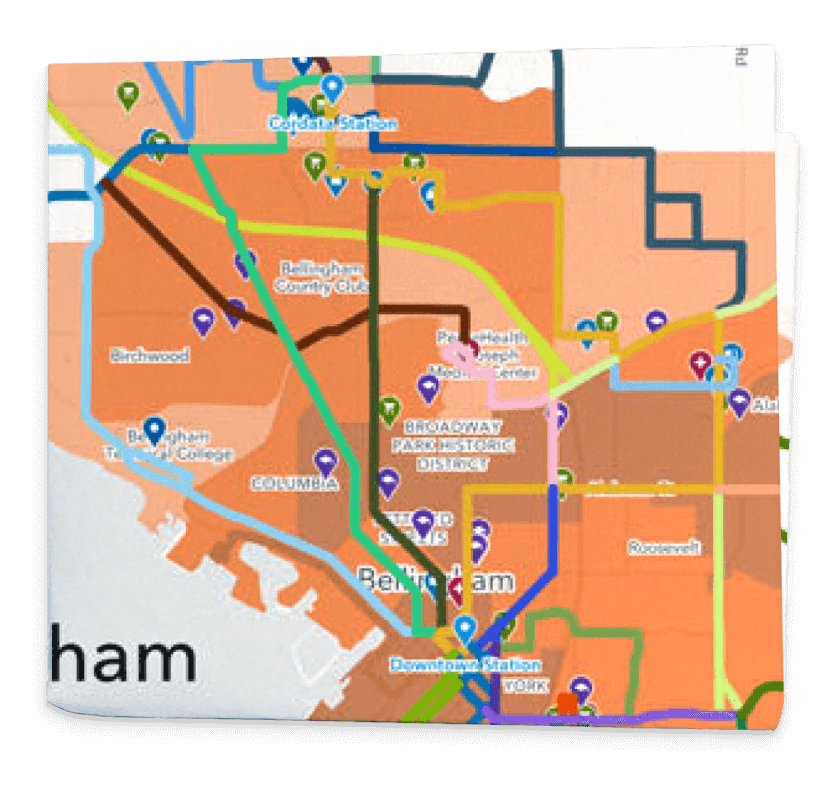
Our first draft had us using a literal county map provided by WTA with orange overlays for population density and long stringy roads color-coded with dozens of officially identified corridors. Dense urban areas left no room for game pieces; rural sections stretched endlessly. The second iteration simplified geography into labeled corridors but nonetheless remained unwieldy and overly literal. With each iteration, WTA staff play-tested internally and found sticking points that were worth addressing.
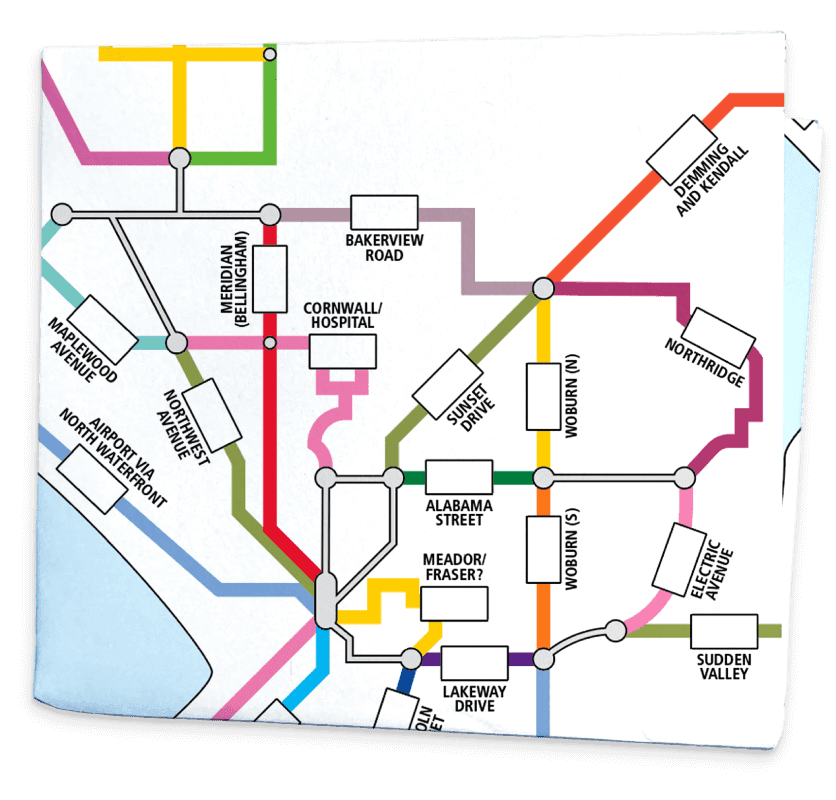
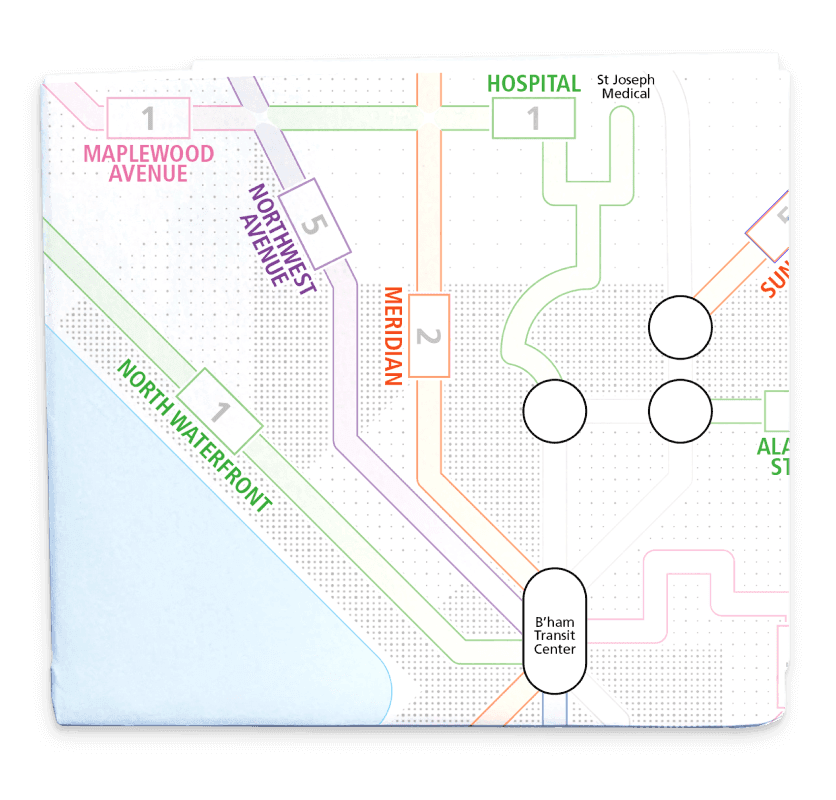
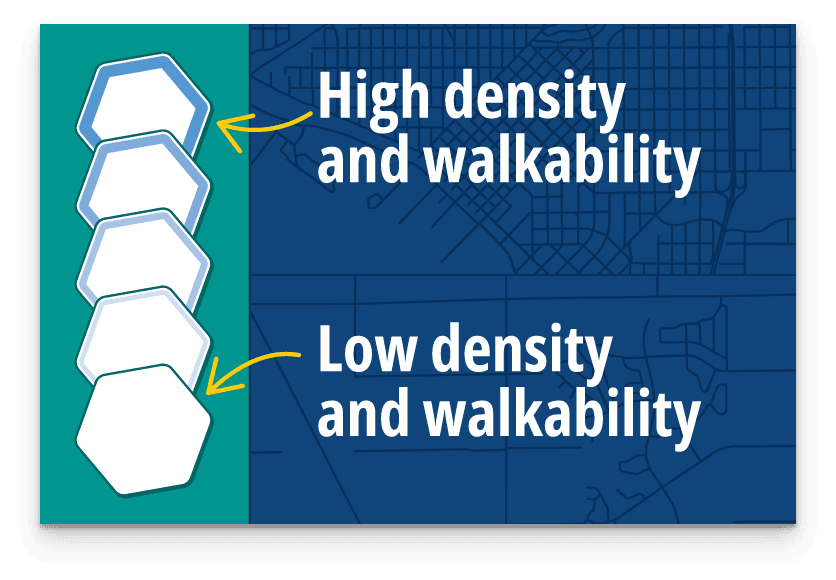
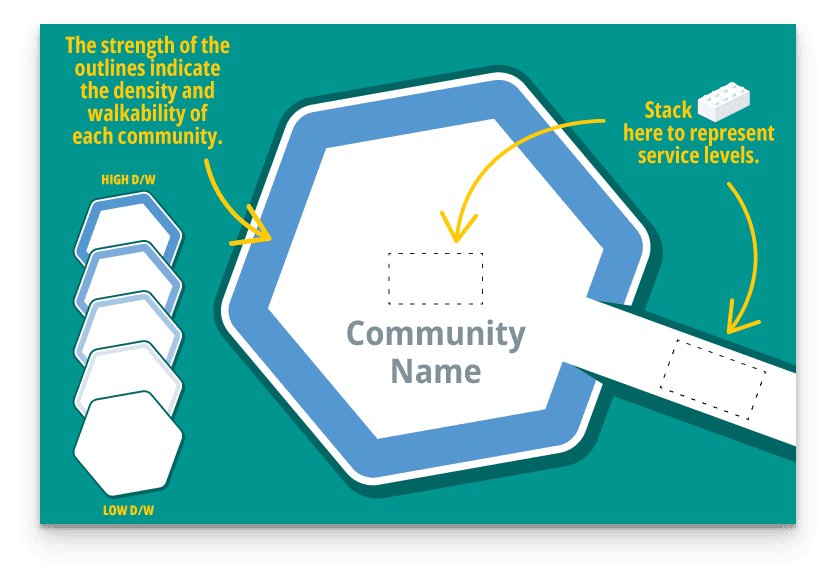
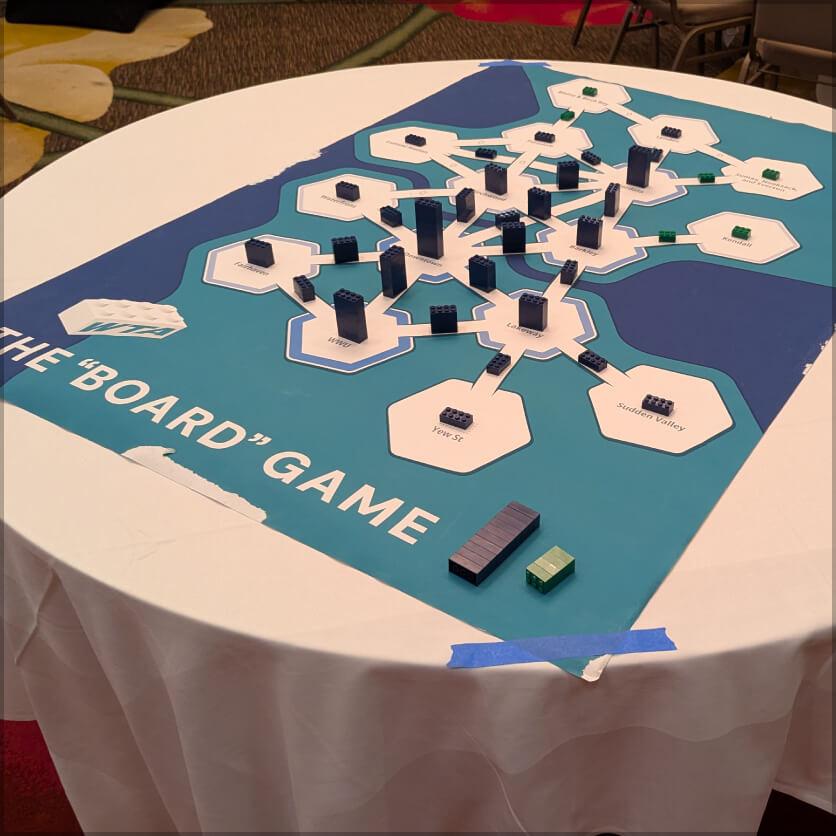
The breakthrough came through systematic abstraction. We abandoned geographic accuracy entirely, creating hexagonal nodes with visualized density and walkability connected by bridges. Each node represented a community, and each bridge represented point-to-point routes between them. This shift was crucial; it prevented fixation on specific districts and encouraged the players to think in systems rather than specifics.
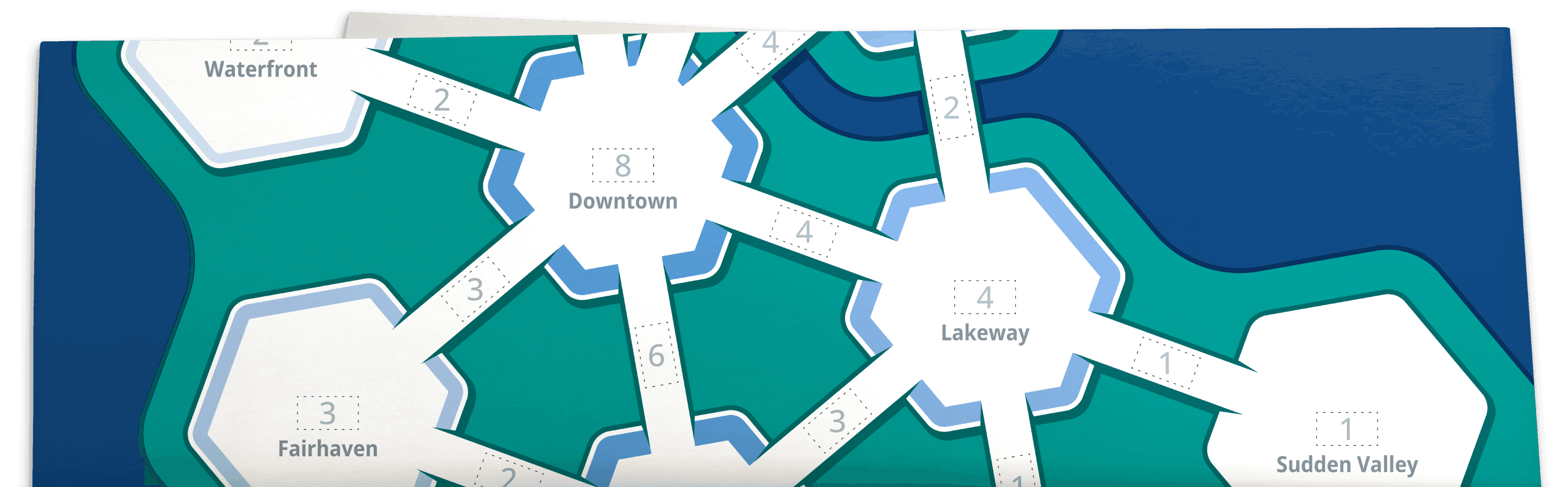
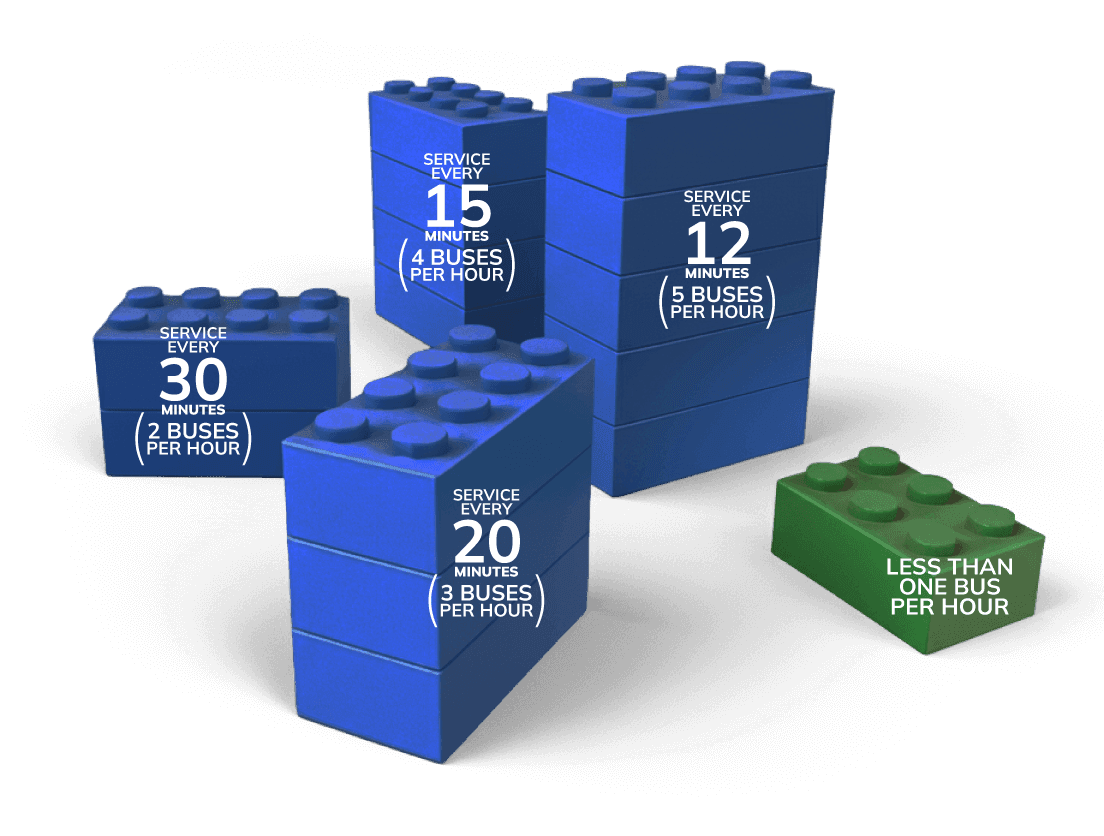
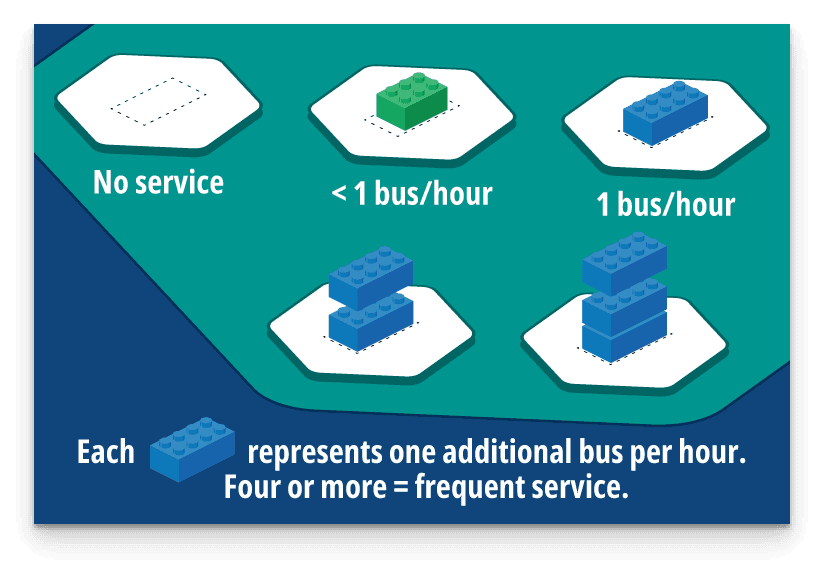
Blue 2×4 Lego bricks became our currency, with each representing one bus per direction per hour and stacked bricks indicating frequency. Six stacked blue bricks meant buses every ten minutes. Smaller green bricks represented less-than-hourly service.
The design challenge wasn't just visual but conceptual. While we started with a corridor-based approach and might have held on to that paradigm for too long, we demonstrated how node-and-bridge thinking better differentiated between point-to-point service and community circulation. Moving from geographic representation to abstract diagrams required foresight into the reactions of literal-minded participants who would have resisted the simplification if not for the preëmptive interventions of WTA staff.
The rest of the solution
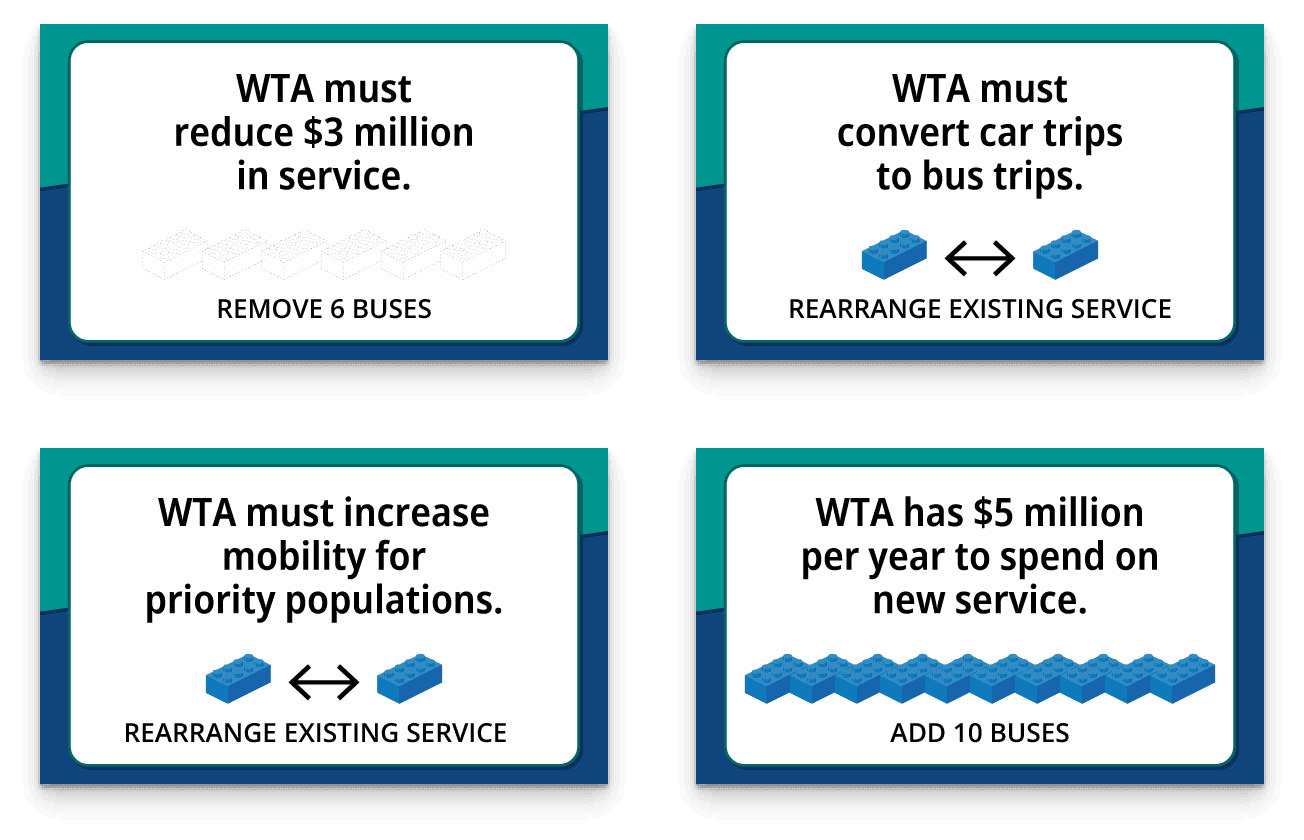
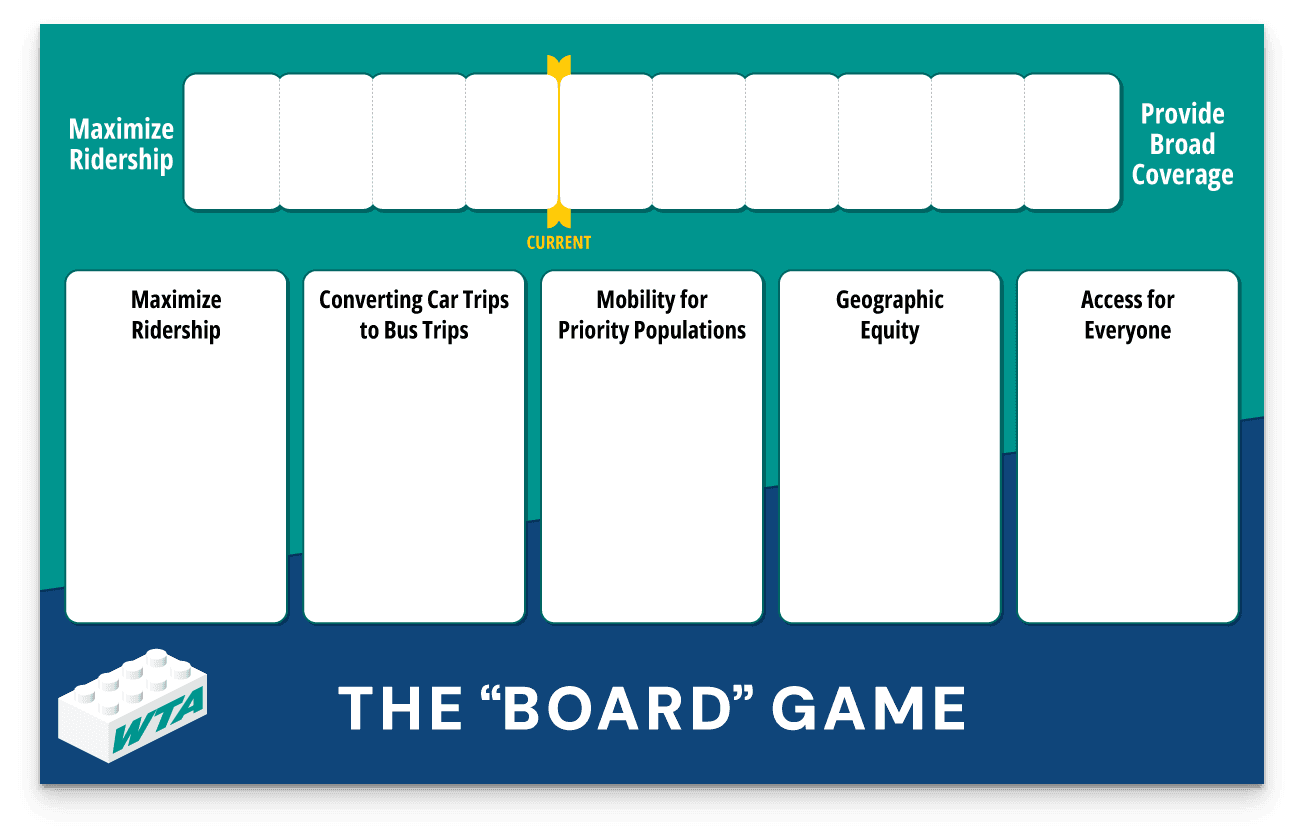
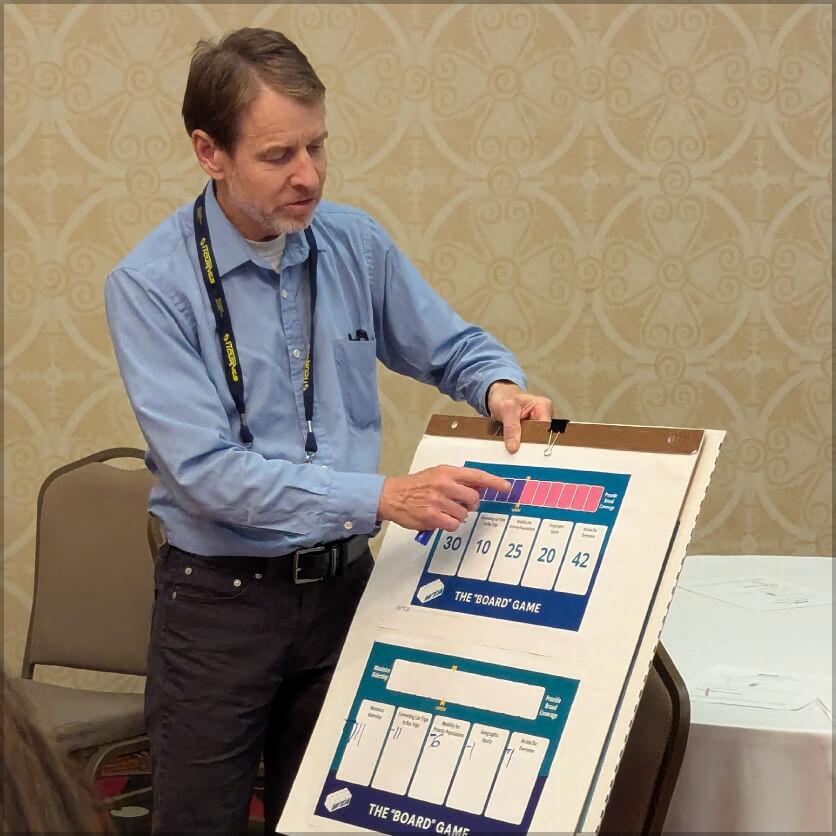
Through iterative playtesting and email refinements over about a month, we developed scenario cards and a scoring system chart to pair with the game board. Staff members moved magnetic chips to “score” the configuration in real time as board members manipulated the pieces on the board. Board members were constrained by scenario cards to make trade-offs in ridership maximization, car trip conversion, mobility for priority populations, geographic equity, and universal access.
Going live
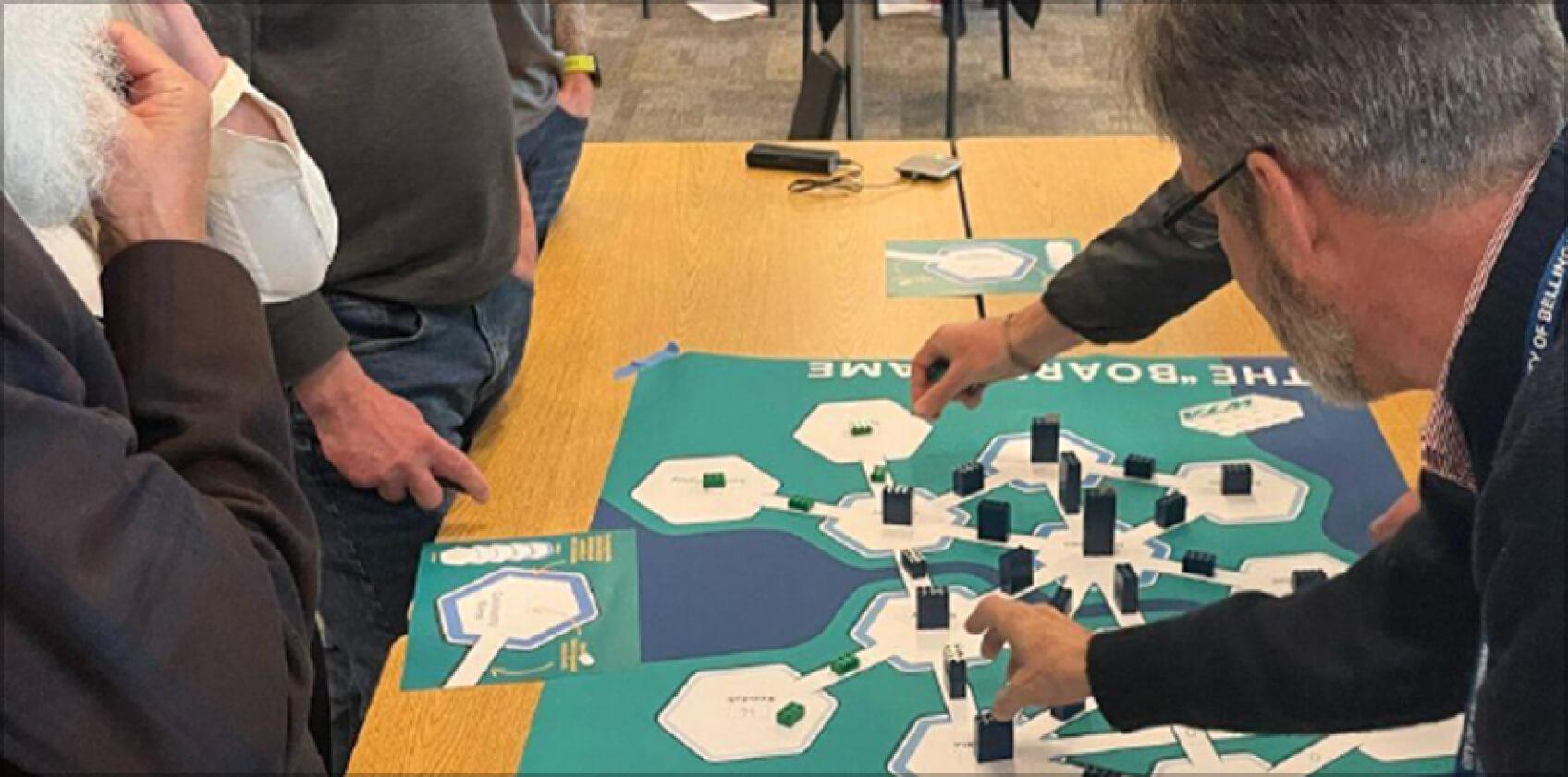
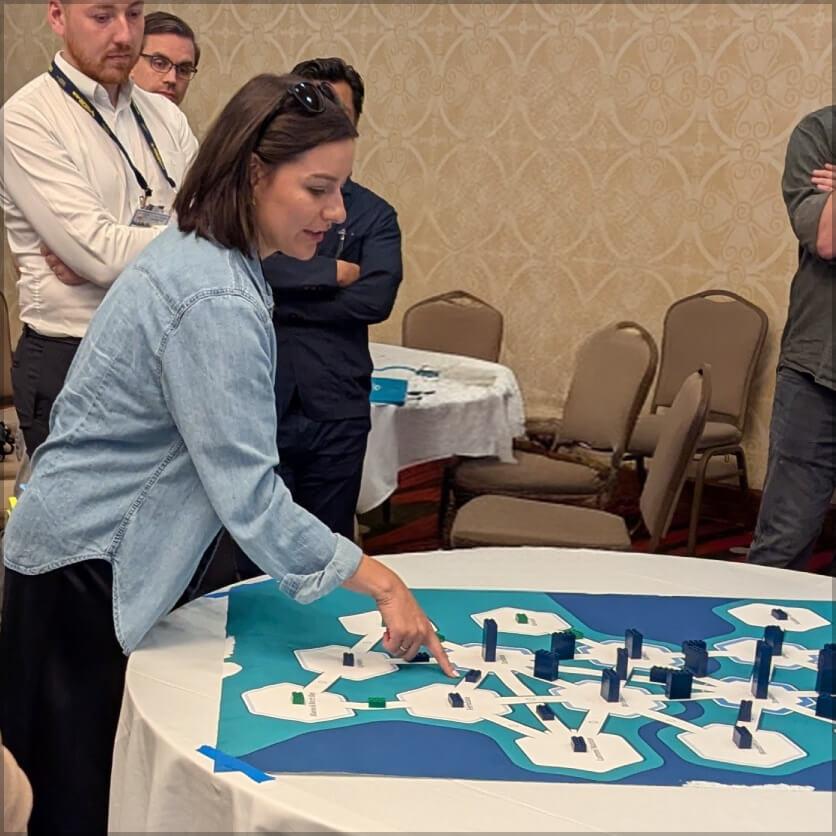
The three-hour board session exceeded expectations and led to a formal request to study changing WTA's coverage-to-ridership ratio from 60:40 to 40:60—a significant strategic shift. When WTA presented the game at the Washington State Transit Association conference, attendees who might have been initially reluctant to participate found themselves moving bricks and debating scenarios rather than passively observing. I had the privilege of watching in person and observing how well WTA conducted the game.
This project reminded us that effective communication design works whether audiences are internal or external to an organization. Sometimes the most sophisticated solution involves helping smart adults play with children's blocks.
You can visit the Whatcom Transportation Authority website at ridewta.com or learn more about our work with public sector and transportation clients. .